
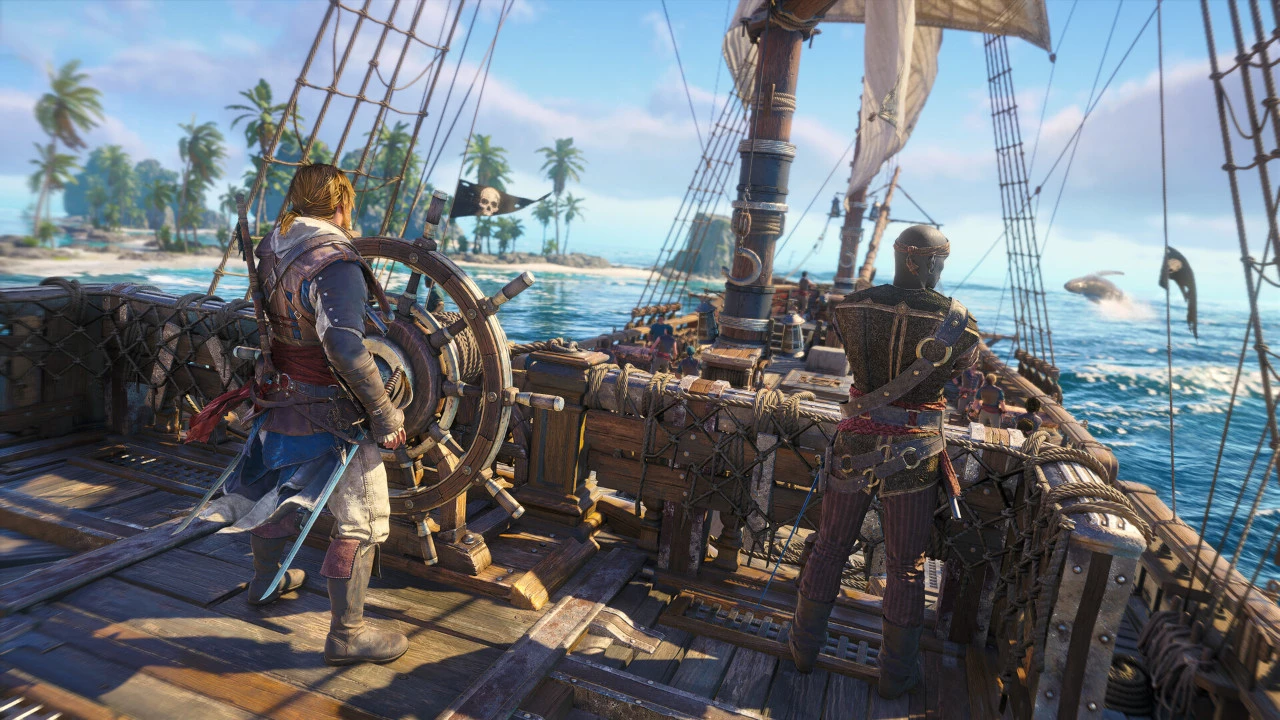
The creative director of the Assassin’s Creed Black Flag remake, Paul Foo, who was instrumental in creating the original 2013 release, has recently shared fascinating memories about the controversial launch of the beloved pirate action-adventure game. In a candid interview, Foo revealed that despite Black Flag eventually becoming one of the most cherished entries in the franchise, its initial reception was far from universally positive, particularly regarding its protagonist Edward Kenway.
The revelations come at an interesting time as Ubisoft prepares to release Assassin’s Creed Black Flag Resynced, a complete remake of the nautical adventure that captured millions of players’ imaginations over a decade ago. Foo’s insights provide a rare glimpse into the development challenges and creative decisions that shaped one of gaming’s most memorable open-world experiences.
The Controversial Birth of Edward Kenway
According to Paul Foo, not everyone at Ubisoft was initially sold on Edward Kenway as a protagonist. Unlike previous Assassin’s Creed heroes who were deeply committed to the Brotherhood’s cause from the outset, Edward was designed as a selfish pirate primarily motivated by personal gain and treasure. This departure from tradition raised concerns among some team members and executives who worried that players wouldn’t connect with such a morally ambiguous character. The development team faced significant internal debates about whether a protagonist who wasn’t even a proper Assassin for much of the game could carry the weight of the franchise.
The original Assassin’s Creed Black Flag launched in October 2013 for PlayStation 3, Xbox 360, and PC, with next-generation versions following shortly after for PlayStation 4 and Xbox One. The game represented a bold departure for the series, introducing extensive naval combat mechanics and an open-world Caribbean setting that allowed players to freely explore islands, hunt for treasure, and engage in ship-to-ship battles. These innovations were risky moves that could have alienated the franchise’s established fanbase.
From Skepticism to Beloved Classic
Despite the initial skepticism, Assassin’s Creed Black Flag went on to become a critical and commercial success, selling over 15 million copies and earning widespread acclaim for its refreshing take on the franchise formula. Critics praised the game’s naval combat system, which was so popular that it eventually spawned a standalone spinoff in Skull and Bones. Edward Kenway’s character arc, which saw him transform from a selfish privateer into a committed member of the Assassin Brotherhood, resonated deeply with players who appreciated the more nuanced approach to storytelling.
The game’s historical setting during the Golden Age of Piracy, featuring real-world figures like Blackbeard, Charles Vane, and Anne Bonny, added an educational dimension that became a hallmark of the series. Ubisoft’s meticulous attention to historical detail, combined with the freedom to explore a vast open world filled with secrets and adventures, created an experience that many fans still consider the pinnacle of the Assassin’s Creed franchise.
The Resynced Remake and Future Prospects
Now, with Assassin’s Creed Black Flag Resynced in development, Ubisoft aims to introduce this beloved adventure to a new generation of players while giving longtime fans a chance to revisit the Caribbean with modern graphics and gameplay improvements. The remake promises enhanced visuals, refined combat mechanics, and quality-of-life improvements that weren’t possible on the original hardware. Paul Foo’s return to the project as creative director suggests that the remake will maintain the spirit of the original while addressing its few shortcomings.
The announcement of the remake reflects a broader industry trend of revisiting beloved classics from the PlayStation 3 and Xbox 360 era. As gaming technology continues to advance, studios are finding value in bringing their most successful titles to contemporary platforms, allowing both nostalgic veterans and curious newcomers to experience these defining games. For Assassin’s Creed Black Flag, this represents an opportunity to cement its legacy as one of the greatest open-world adventures ever created, proving that sometimes the most controversial creative decisions lead to the most memorable results.
Expert Opinion: The success of Assassin’s Creed Black Flag demonstrates that players are often more receptive to unconventional protagonists than developers initially assume. The remake’s announcement, coming during a period of franchise reassessment for Ubisoft, suggests the company recognizes that returning to proven formulas may be key to reinvigorating the series. If Resynced captures the magic of the original while modernizing its systems, it could serve as a template for future remakes in the franchise.