Volleyball Positions Explained: Setter, Hitters, Middle, Opposite and Libero
What setters, outside hitters, opposites, middle blockers, liberos and defensive specialists do, and how playing roles differ from the six court positions.
Ask a volleyball coach what position someone plays and you will get an answer like “outside” or “middle”. Ask a referee and you will hear a number between one and six. Both are right, because volleyball has two separate ideas of “position”: the playing role a player specialises in, and the rotational court position they occupy at the moment of the serve. Mixing them up is the most common source of confusion for new fans, so this guide separates them first and then goes role by role.
Roles vs court positions: two different systems
The FIVB rules number the six spots on each half of the court. The three front-row players stand in positions 4 (front-left), 3 (front-centre) and 2 (front-right). The back row is 5 (back-left), 6 (back-centre) and 1 (back-right). The player in position 1 serves. When a team wins back the serve, everyone moves one place clockwise.
These numbers only constrain where players stand when the ball is served. Under the 2025–2028 rules, the receiving team must be in its rotational order at the moment of the service hit; the serving team is free to occupy any position. As soon as the serve is struck, everyone may move anywhere on their side. That freedom is what makes specialised roles possible: a setter who starts the rally in position 4 can sprint to the right-centre of the net to set, and a middle blocker who starts on the left can slide to the middle.
What players cannot change is front-row and back-row status. A back-row player may not block and may only attack a ball above net height by jumping from behind the 3 m attack line. Those restrictions shape every role described below. If you need a refresher on the basic laws, see our beginner’s guide to volleyball rules.
The setter: the team’s playmaker
The setter usually takes the team’s second contact and delivers the ball to an attacker. That sounds modest, but the setter decides who attacks, where and at what tempo on nearly every rally, so the role is often compared with a quarterback or a point guard.
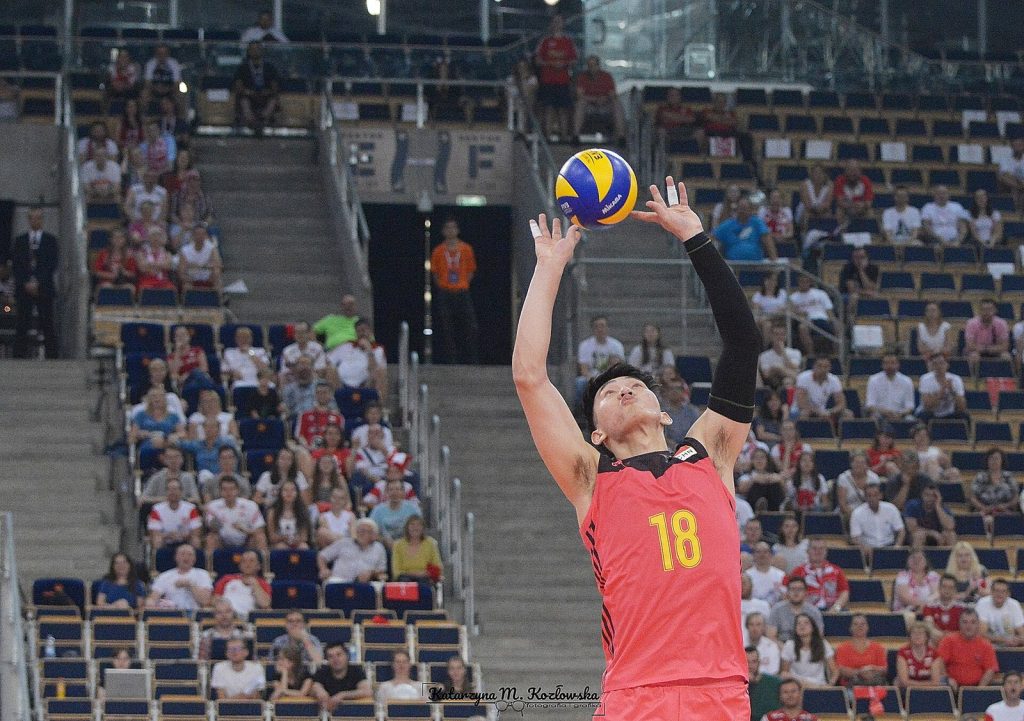
What the setter does
- Serve receive: the setter typically does not pass. Teams hide the setter in reception so they can run to the “target” area near the net, slightly right of centre.
- Attack: sets to the outside, middle, opposite and back row, choosing based on the pass quality, the opposing block and who is in form. When the setter is in the front row, a surprise “dump” over the net with one hand is a classic weapon.
- Defence: plays right-back defence when in the back row and blocks on the right side when in the front row.
Profile
Soft, consistent hands; quick feet; fast decision-making; and the composure to run the offence when the pass is poor. Height helps for blocking and for setting tight balls, but accuracy and court vision matter more.
Outside hitter (left side)
The outside hitter attacks mostly from the left side of the net, near the left antenna. Teams beyond beginner level usually play two outside hitters, positioned opposite each other in the rotation so one is always in the front row.
What the outside hitter does
- Serve receive: outside hitters are core passers and usually take a large share of the serves alongside the libero.
- Attack: the default option when the pass is poor, because a high ball to the left can be set from almost anywhere. They also attack from the back row, typically through the middle.
- Defence: block opposing right-side attackers and dig in the back row.
Profile
The most complete all-round skill set on the team: passing, attacking against a formed block, serving and defence. At elite level outside hitters are often slightly shorter than middles and opposites but have the strongest ball-control skills, which is why many pass in the back row instead of being replaced.
Opposite (right side)
The opposite hitter lines up across the rotation from the setter, which is where the name comes from. When the setter is in the front row, the opposite is in the back row, and vice versa.
What the opposite does
- Serve receive: in many elite systems the opposite is excused from passing so they can focus on attacking.
- Attack: the main scoring threat from the right side and from the back row. Right-side sets travel further from the setter and arrive at awkward angles, so opposites need to be technically sharp. Left-handed opposites are prized because the ball comes across their body less.
- Defence: block the opponent’s outside hitter, who is usually their most-used attacker, and act as the emergency setter when the setter digs the first ball.
Profile
Big, physical and capable of scoring against a two- or three-person block. Strong serving is also a priority for this role.
Middle blocker
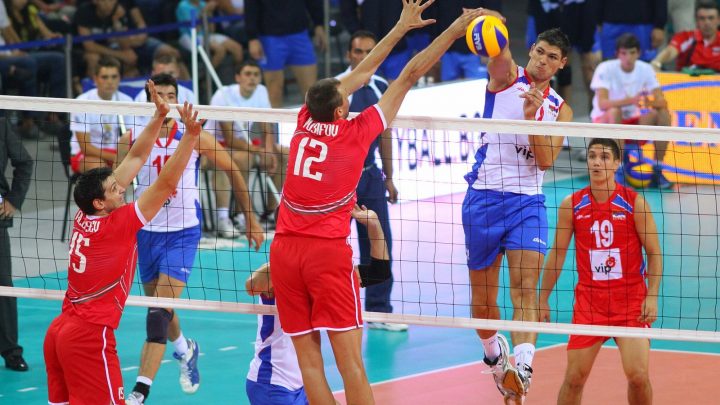
The middle blocker is the specialist at the centre of the net. Teams play two middles, again set opposite each other in the rotation.
What the middle blocker does
- Serve receive: usually none. Middles stay near the net to prepare for a quick attack.
- Attack: fast “quick” sets close to the setter and slide attacks behind the setter. Even when they do not get the ball, a middle running a quick holds the opponent’s middle blocker in place, opening space for the hitters.
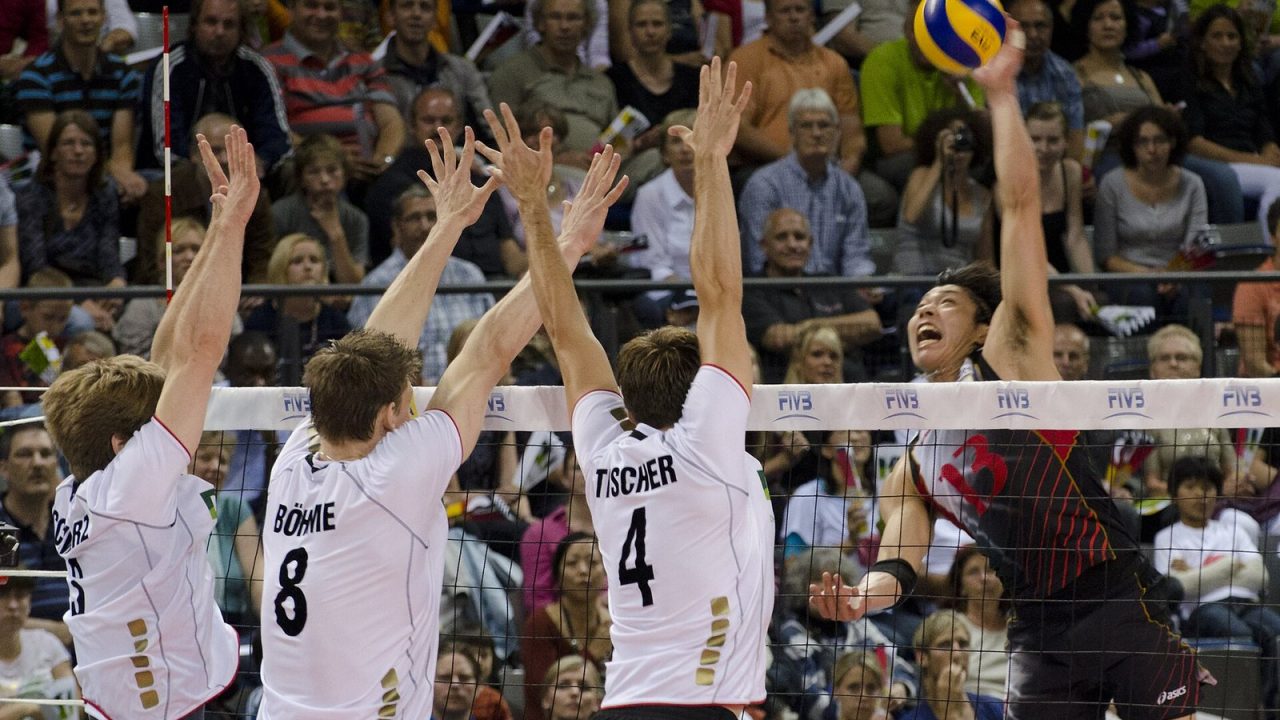
- Defence: read the setter and move along the net to help block on either side. The middle often touches more balls on the block than anyone else.
Profile
At the elite level, middles are typically the tallest players on the team. They need fast lateral footwork, good timing on the quick attack and the discipline to read rather than guess on the block. Because middles are usually weaker passers and defenders, most teams swap them for the libero when they rotate to the back row.
Libero
The libero is a back-row defensive specialist introduced internationally in 1998. The libero wears a jersey of a clearly different dominant colour so officials can track them, and may replace any back-row player.
What the libero does
- Serve receive: usually the team’s best passer, taking as much court as possible.
- Attack: under FIVB rules, the libero may not complete an attack hit when the ball is entirely above the top of the net, and may not serve, block or attempt to block. If the libero sets with overhand fingers from inside the front zone, the attacker may not hit that ball above net height.
- Defence: dig hard-driven attacks, cover tips and run the back-row defence. Many liberos also take the second contact when the setter plays the first ball.
Profile
Elite reading, platform control and quickness. Height is irrelevant for the role, which is why it opened the top level to shorter players. Libero replacements do not count as substitutions and are unlimited, though a rally must be completed between two replacements. Teams may register up to two liberos, but only one may be on court at any time.
Defensive specialist (and serving specialist)
A defensive specialist is a back-row player brought in through a normal substitution to strengthen passing and defence, often in place of a weak-passing front-row player as they rotate back. Unlike the libero, the defensive specialist has no special rules: they can serve, attack and play anywhere legally, but every entry uses up a substitution. That is why this role is far more common in school, club and college volleyball, where substitution limits are looser, than in FIVB competition, where each team has six substitutions per set.
A close relative is the serving specialist, a substitute brought on for one rotation to deliver a tough serve, then replaced again.
Roles at a glance
| Role | Number on court | Main jobs | Typical profile |
|---|---|---|---|
| Setter | 1 (in a 5-1) | Second contact, distributes attack, blocks on the right | Soft hands, fast feet, decision-making |
| Outside hitter | 2 | Passing, attacking from the left and back row, defence | Best all-round skills |
| Opposite | 1 | Right-side and back-row scoring, blocking the opponent’s outside | Powerful attacker, strong server |
| Middle blocker | 2 (front row only) | Quick attacks, central blocking | Tallest players, fast lateral movement |
| Libero | 0–1 at a time | Serve receive and back-row defence | Elite passing and reading |
| Defensive specialist | As needed | Back-row passing via normal substitution | Strong ball control |
How the roles fit together in a standard line-up
Most competitive teams use a “5-1” system: one setter, one opposite, two outside hitters and two middles, plus a libero. In the rotation order the pattern runs setter, outside, middle, opposite, outside, middle, so that like roles sit directly opposite each other. That arrangement guarantees one outside, one middle and either the setter or the opposite in the front row at all times.
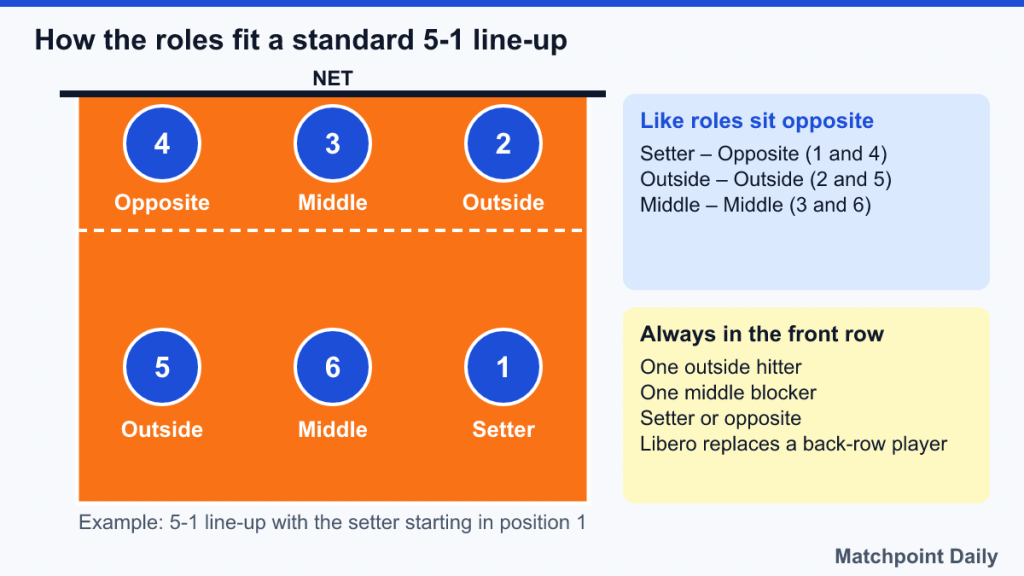
When the setter is in the back row, the team has three front-row attackers; when the setter is in front, it has two, plus the option of the setter attacking the second ball. Back-row attacks from the opposite and the outside hitters add further options. Other systems, such as the 6-2 and 4-2, share the setting job between two players and are more common at developing levels.
Which position suits you?
For newer players, a few rough guidelines help:
- If you love reading the game and want the ball on every play, try setting.
- If you are a good jumper with reliable passing, outside hitter gives you the most touches.
- If you are tall and quick off the ground, middle blocker makes use of your reach.
- If you can hit hard and do not mind facing the biggest blocks, opposite is the scoring role.
- If you are a confident passer and enjoy defence, libero rewards anticipation over size.
At youth and beginner levels, coaches often rotate players through several roles before specialising. That is a good thing: learning to pass, set and hit makes you better in whichever role you eventually settle into.
Common mix-ups to avoid
- “Position 4 means outside hitter.” Not necessarily. Position 4 is a spot in the rotation; an outside hitter may start in any of the six spots depending on the line-up.
- “The libero can’t touch the ball with their fingers.” They can set. The restriction applies to attacking from a libero’s overhand set made inside the front zone.
- “Middles never attack from the back row.” They can legally, but most teams substitute them for the libero, so it rarely happens.
- “The opposite is just a backup setter.” The opposite is usually the team’s top scorer; setting is an occasional emergency job.